
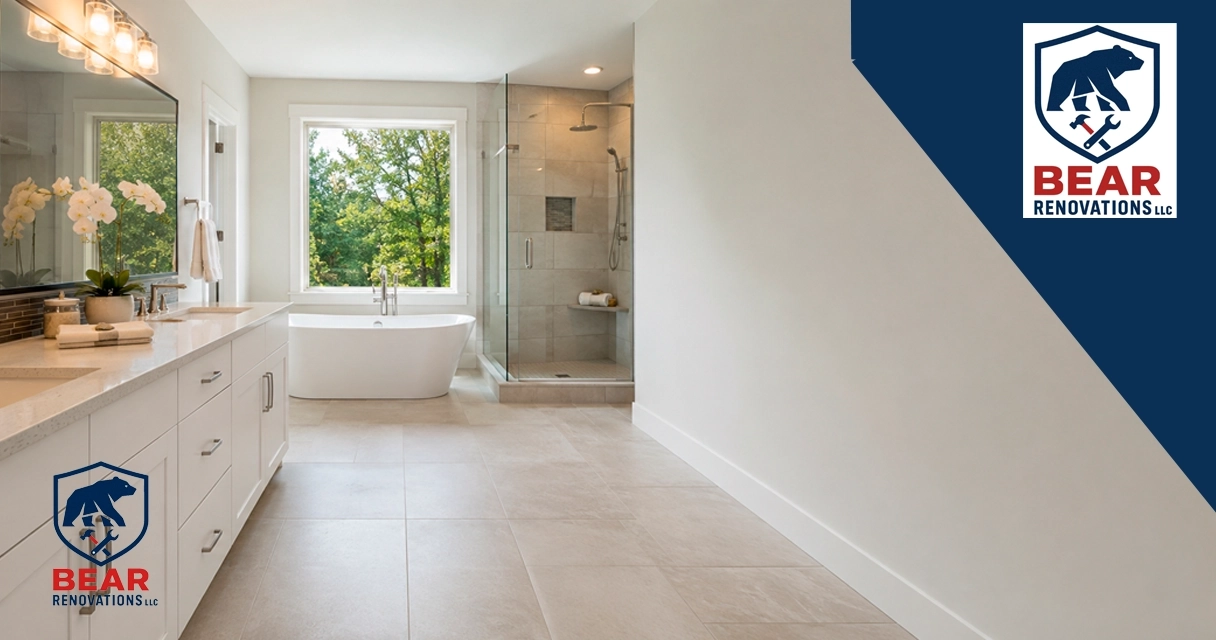
The best flooring for bathrooms is a waterproof material that handles moisture, temperature swings and slippery feet, such as porcelain tile, luxury vinyl plank or waterproof laminate. Ceramic and porcelain tile remain the top choice for durability and resale value, while vinyl plank offers a warmer, softer, budget-friendly alternative. Traditional hardwood and standard laminate are the two materials to avoid, since both swell and warp when exposed to water.
A bathroom floor works harder than almost any other surface in the house. It deals with splashed water, steam, temperature changes and bare feet every single day, so the wrong material can warp, crack or turn dangerously slippery within a year or two. Choosing the best flooring for bathrooms is not just about looks — it directly affects safety, maintenance and how long the renovation actually lasts.
Bear Renovations LLC has installed bathroom flooring across Philadelphia, Lansdale, Cherry Hill and Moorestown for homeowners updating everything from small powder rooms to full master baths. This guide breaks down the best flooring for bathrooms — which materials perform best, what each one costs, and how to pick the right option for your space and budget.
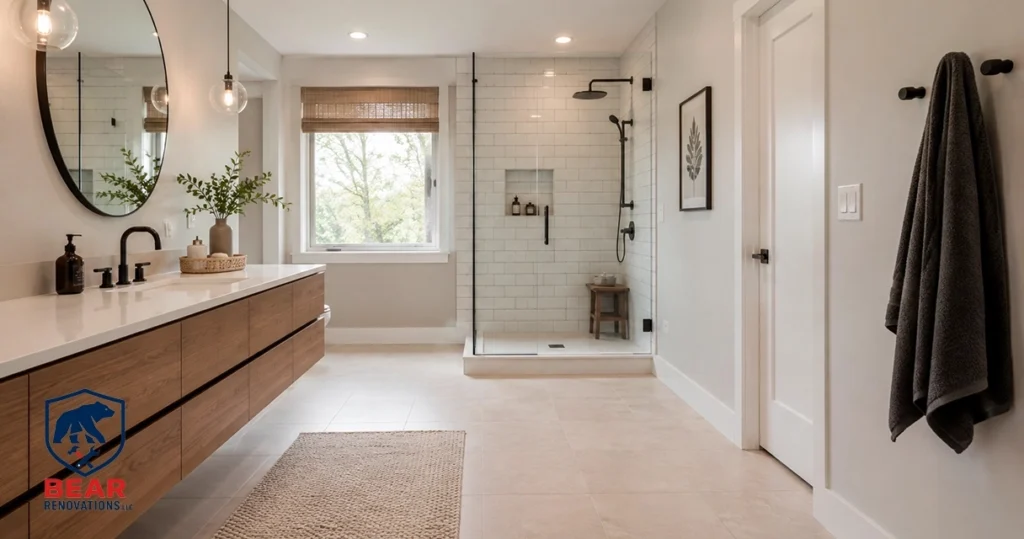
What is the best flooring for bathrooms?
The best flooring for bathrooms is 100% waterproof, slip-resistant and easy to clean. Beyond looks, a good bathroom floor needs to survive constant humidity without warping, staining or growing mold underneath. The materials that consistently meet those three requirements are:
- Porcelain or ceramic tile
- Luxury vinyl plank (LVP) or luxury vinyl tile (LVT)
- Waterproof laminate (specifically rated for wet areas)
- Natural stone (with proper sealing)
Standard hardwood, laminate that is not water-rated, and carpet all fail at least one of these requirements and are not recommended for bathrooms.
Is tile the best flooring for a bathroom?
Yes, porcelain and ceramic tile are the most popular and most durable bathroom flooring options. Both are fully waterproof once grouted and sealed correctly, resist scratches and stains, and hold up for 15 to 25 years with basic care. Porcelain is denser and slightly more water-resistant than ceramic, which makes it the better pick for high-moisture bathrooms. For many homeowners, tile is the best flooring for bathrooms when durability and resale value come first.
- Pros: waterproof, extremely durable, wide range of styles, adds resale value
- Cons: cold underfoot without radiant heating, grout lines need periodic sealing, harder and less forgiving if something is dropped
Is porcelain tile better than ceramic for bathrooms? Porcelain is fired at a higher temperature, making it denser and slightly more water-resistant than ceramic. Ceramic costs less and is easier to cut, which makes it a solid choice for lower-traffic guest bathrooms.
Homeowners planning a full bathroom overhaul, including tile, vanity and a new shower, usually get the best result by working with bathroom remodelers in Philadelphia who coordinate waterproofing, plumbing and tile in a single project.
Is vinyl flooring good for a bathroom?
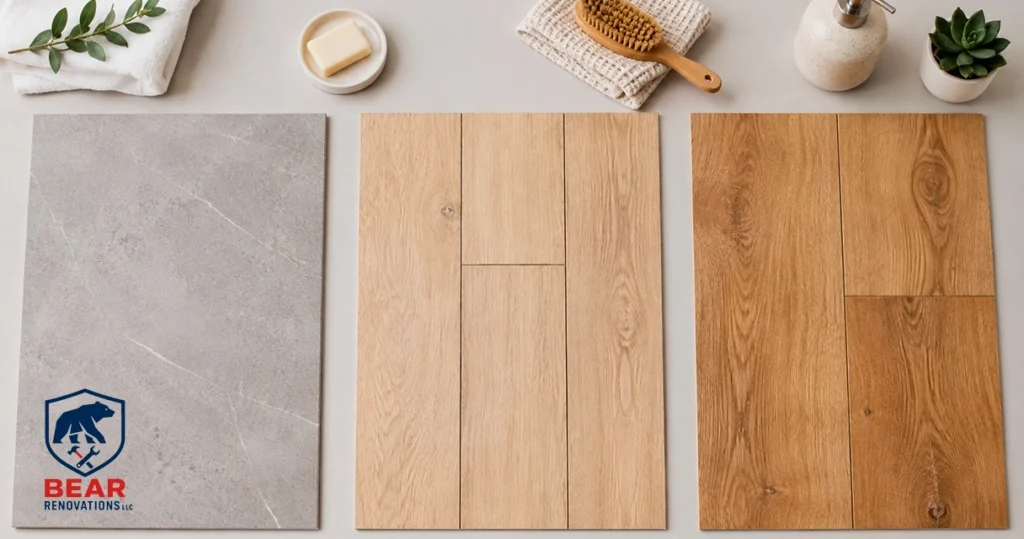
Yes, luxury vinyl plank and luxury vinyl tile are excellent, budget-friendly options for bathrooms. Modern LVP is 100% waterproof, warmer and softer underfoot than tile, and installs faster with fewer seams for water to seep through. It also mimics the look of hardwood or stone at a fraction of the price and maintenance. When comfort and budget lead the decision, vinyl is often the best flooring for bathrooms.
- Pros: fully waterproof, comfortable underfoot, budget-friendly, fast installation, low maintenance
- Cons: shorter lifespan than tile (10 to 20 years), can dent under heavy fixtures, lower resale value than tile in higher-end homes
Does luxury vinyl plank need a special underlayment in bathrooms? Most click-lock LVP includes a built-in moisture-resistant underlayment, but the subfloor still needs to be flat and dry before installation. Skipping subfloor prep is the most common reason vinyl fails early in wet rooms.
Vinyl flooring in a bathroom pairs well with a larger project. If you are also updating your kitchen, ask about matching waterproof flooring during your kitchen remodeling in Philadelphia for a consistent look throughout the home.
Is laminate flooring safe for bathrooms?
Only waterproof-rated laminate is safe for a bathroom; standard laminate should be avoided. Regular laminate flooring has a fiberboard core that swells and delaminates when it absorbs water, even from small splashes near the sink or tub. Waterproof laminate uses a sealed, water-resistant core designed specifically for bathrooms, mudrooms and basements. It is not the best flooring for bathrooms overall, but it is a solid wood-look option when rated for wet areas.
- Pros: wood-look style, softer than tile, more affordable than solid hardwood
- Cons: fewer style options than vinyl, still less water-tolerant than tile or LVP over the long term
If a laminate product does not explicitly list a bathroom or wet-area rating, it is not the right choice for this room, regardless of how the surface looks.
What is the best flooring for a small bathroom?
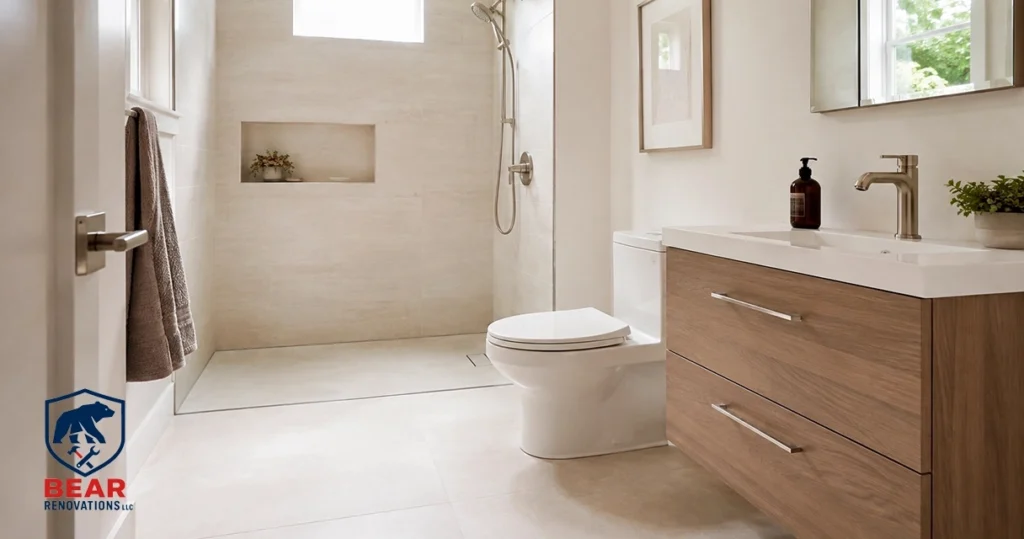
Large-format tile or wide vinyl planks in light colors make a small bathroom feel bigger and stay easier to clean. Fewer grout lines mean less visual clutter and less area to scrub, while a light, consistent color reduces the “chopped up” look that small tiles can create in a compact space. The best flooring for bathrooms that are small keeps the surface continuous and the palette light.
- Choose 12×24-inch or larger tiles instead of small mosaic tiles for the main floor
- Stick to a light, warm tone (soft gray, beige or off-white) to open up the space
- Run planks or tiles in one continuous direction, ideally toward the largest wall
- Match the shower floor tile to the main floor to avoid visual breaks
Do large-format tiles make a small bathroom look bigger? Yes. Fewer grout lines create a more continuous surface, which tricks the eye into perceiving more square footage than small tiles with dense grout lines.
How much does bathroom flooring cost in Philadelphia?
Bathroom flooring typically costs between $6 and $20 per square foot installed, depending on the material. Vinyl and laminate sit at the lower end, while porcelain tile, natural stone and radiant-heated floors sit at the higher end. A standard 40-square-foot bathroom floor usually falls between $500 and $1,800 for materials and labor. In most Philadelphia projects, the best flooring for bathrooms balances upfront cost against how long the material lasts.
| Material | Cost per sq. ft. (installed) | Lifespan | Best for |
|---|---|---|---|
| Luxury vinyl plank/tile | $6 – $10 | 10–20 years | Budget renovations, rentals |
| Waterproof laminate | $7 – $12 | 10–15 years | Wood-look on a budget |
| Ceramic tile | $8 – $15 | 15–20 years | Guest baths, standard budgets |
| Porcelain tile | $10 – $20 | 20–25 years | Primary baths, resale value |
| Natural stone | $15 – $30+ | 25+ years | High-end master baths |
Does removing old tile add to the project cost? Yes, demolition and disposal of existing tile typically adds $2 to $5 per square foot, plus the cost of leveling the subfloor once the old material is gone. This is usually included in a single itemized quote from a licensed contractor.
For an accurate number based on your bathroom’s size and material choice, request your free flooring estimate and get a written breakdown before work begins.
Best flooring for bathrooms: tile vs. vinyl vs. laminate
Each material fits a different priority: tile wins on durability and resale value, vinyl wins on comfort and budget, and waterproof laminate wins on wood-look style at a mid-range price. If the bathroom sees heavy daily use or you plan to sell the home in the next few years, tile is the safer long-term investment. If comfort underfoot and installation speed matter more, luxury vinyl is hard to beat.
- Renovating the whole home at once? Bundle flooring into a full home renovation in Philadelphia so materials, scheduling and finishes stay consistent room to room.
- Curious what a finished project looks like? See our recent kitchen remodeling project in Philadelphia for an example of the same waterproof flooring principles applied to a kitchen.
Frequently Asked Questions
What is the best flooring for bathrooms?
The best flooring for bathrooms is porcelain tile for durability and water resistance, while luxury vinyl plank is the best budget-friendly alternative. Both are fully waterproof and hold up well in daily use.
Is vinyl flooring good for bathrooms?
As a budget pick, the best flooring for bathrooms is often luxury vinyl: vinyl plank and tile are fully waterproof, comfortable underfoot and cost less than ceramic or porcelain tile. They are a strong choice for most bathrooms, especially on a tighter budget.
Is laminate flooring good for bathrooms?
Only laminate specifically rated as waterproof is safe for a bathroom. Standard laminate absorbs water at the seams and will swell or delaminate over time.
Can you install hardwood flooring in a bathroom?
Solid hardwood is not recommended for bathrooms because it warps and stains when exposed to moisture. Engineered wood-look vinyl or waterproof laminate deliver a similar appearance without the water risk.
How much does bathroom flooring cost?
The best flooring for bathrooms usually costs between $500 and $1,800 for a standard-size bathroom, depending on the material chosen and whether old flooring needs to be removed first.
How do I clean bathroom tile floor?
Sweep or vacuum loose dirt, then mop with a pH-neutral cleaner and warm water. Avoid vinegar or acidic cleaners on natural stone, and reseal grout every 1 to 2 years to keep it water-resistant.
What flooring is waterproof for bathrooms?
The best flooring for bathrooms in terms of water resistance includes porcelain tile, ceramic tile, luxury vinyl plank, luxury vinyl tile and laminate labeled specifically as waterproof. Any product without a wet-area rating should be avoided.
Conclusion
The best flooring for bathrooms comes down to matching the material to how the room is used. Porcelain and ceramic tile deliver the longest lifespan and the best return at resale, luxury vinyl plank offers comfort and value for budget-conscious projects, and waterproof laminate fills the gap for homeowners who want a wood look without the risk. Whichever material fits your bathroom, proper subfloor prep and waterproofing matter just as much as the flooring itself.
Bear Renovations LLC handles the full project — demolition, subfloor leveling, waterproofing and finished flooring — so the result lasts for years, not just for the first season.
Get your free bathroom flooring estimate:
- Phone: (267) 248-7286
- Email: contact@bearrenovationsllc.com
- Service area: Philadelphia, Lansdale, Cherry Hill, Moorestown, and a 70-mile radius across PA, NJ & DE
Content reviewed by the Bear Renovations LLC Team. Last updated: 2026.
